Beneath the surface of the world’s formal religions lies a hidden current—a living, breathing web of mystical traditions that long predate the institutions built over them. This esoteric world is less about rigid creeds and more about direct experience: the pursuit of gnosis, illumination, and inner transformation. It weaves together ancient symbols, initiatory rites, sacred numbers, and archetypal myths into a coherent—if often secret—map of consciousness. Where theocratic dogma tends to establish fixed boundaries, hierarchies, and moral codes, the mystical undercurrent slips between those walls, drawing from universal truths that appear in Sufi poetry, Kabbalistic diagrams, Gnostic gospels, Hermetic texts, and Vedic teachings alike. It is a tradition of synthesis—seeing in every faith’s outer shell an inner seed, and seeking to germinate that seed within the soul.
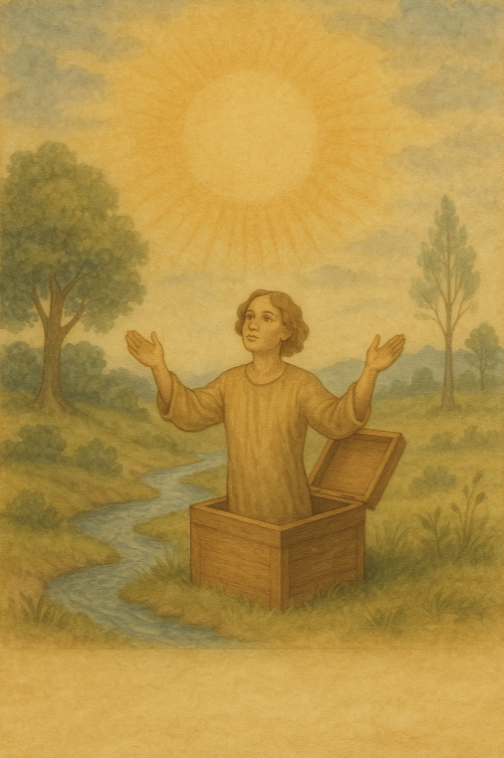
The box is small, yet to those living within it, it can seem infinite. Its walls are built from inherited creeds, unquestioned traditions, and the comforting familiarity of shared dogma. But when one dares to lift the lid, the world outside is revealed—vast, unbounded, and luminous. This act of opening the box is not a rejection of the treasures within, but an expansion of perspective. Beyond the confines of rigid belief lies the realm of direct experience, where truth is not mediated by authority but discovered through inner vision. In stepping out, one sees the box for what it is: a container that preserves wisdom, yet also limits it. From this vantage, dogma is no longer an unchallengeable wall, but a symbol to be understood, reinterpreted, and integrated. Only then can we approach the deeper awareness that transforms belief from a static possession into a living, breathing path toward truth—a path that leads to the same source mystics across time have sought, where all faiths meet in silence.